Allegra Bancroft Warfield

I was diagnosed with breast cancer at 39 and told to “Google it.” I thought the hard part would be treatment. No one prepared me for what came after: hormone suppression, recurrence fear, an altered body, strained relationships, insurance absurdity, and the invisible work of becoming someone new while everyone else was waiting for the story to end.

Breast Cancer Survivorship Is Too Small a Word for What Comes Next

The visible crisis may end. The body, the calendar, and the future still need a map.

There is a strange moment in breast cancer when everyone starts waiting for it to be over. The final infusion. The ringing of the bell. The calendar that stops looking like it was drafted by a crisis negotiator with access to a hospital portal.

People are quick to declare victory. You got through it. You’re fine now. We are wired for tidy endings: emergency, intervention, resolution.

Breast cancer did not get the memo.

Adjuvant treatment unpacks its bags and moves in. A daily pill. Another medication. Years of hormone suppression. Sleep thins out. Memory turns porous. Mood becomes a chemistry experiment nobody adequately warned you about. Breasts gone. A body you no longer recognize as yours.

Survivorship confirms that you are alive. It has very little to say about how to live inside the aftermath.

That part came without instructions. Nobody wrote them for me, so I spent two and a half years researching, collecting, archiving, and translating everything I was never handed.

This started as something I needed. Maybe I am still the unreasonable one for believing women deserve more than a search bar and instructions to cope. But I remember the woman I was: frightened, furious, over-informed and under-guided, trying to turn scraps into a route.

I would rather build for her and be wrong than leave her where I was left.

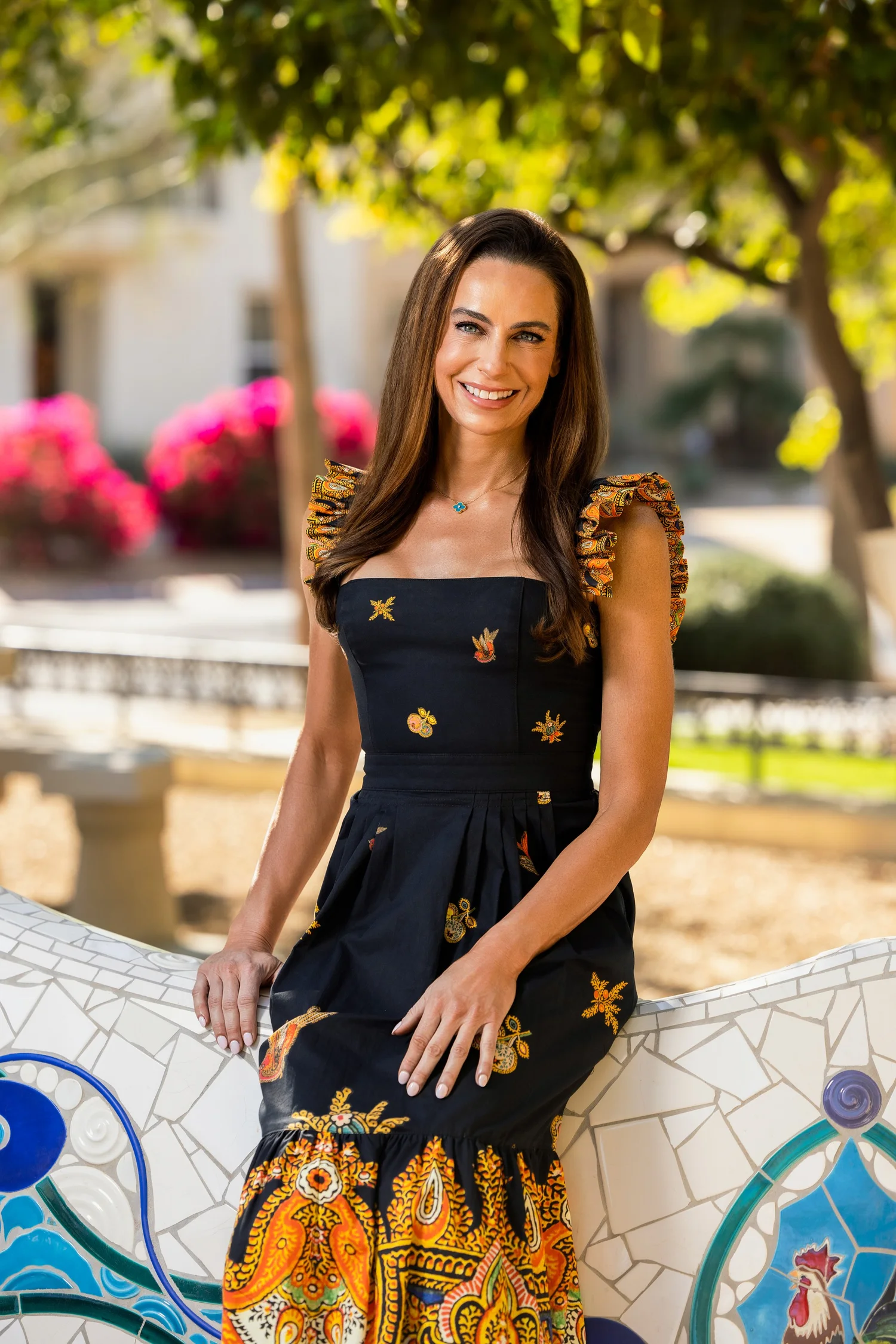
Allegra Warfield, breast cancer research advocate and speaker, wearing a blue Etro dress during her Eisenhower Health feature, representing empowerment and resilience.

I Was Already Trained to Read Systems. Then I Became Trapped Inside One.

Before breast cancer, I spent years studying how systems work and how they fail: finance, consulting, operational breakdown, institutional language, family dynamics, and the quiet ways people learn to survive inside structures that do not name what is happening.

A diagnosis did not make me a systems thinker. It gave me a new system to study from the inside.

I learned how the language of medicine, insurance, research, and survivorship can obscure the actual human cost. I also learned that the woman living inside the system often becomes the one responsible for translating it.

That is the work now: making the maze more legible for the next woman, the people beside her, and the institutions that keep underestimating what the system asks her to carry.

Mapping the Breast Cancer Maze


  • Clinical trials. Second opinions. Treatment decisions. The sudden pressure to become fluent in the language of cancer.

  • You’ve rung the bell. Everyone thinks the hard part is over. What they do not see is the hormone therapy, grief, identity shifts, emotional whiplash, and the quiet shock of realizing life is not simply going back to normal.

  • Insurance, family silence, inherited risk, partners, institutions, finances, bureaucracy, and the ways a diagnosis exposes every structure that was already under strain.

Allegra Warfield working at a laptop, reflecting her work mapping the lived aftermath of breast cancer.
They told me to Google my options. So I did. Then I started building what should have been handed to me.
— Allegra